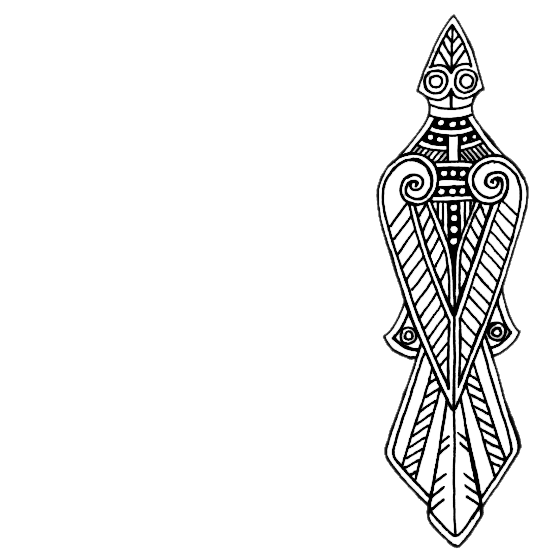

| From Odin's era to Norway's Modernity | ||||
|
Odin: The Unpredictable Deceiver
In Norse mythology, Odin, the Allfather, bore the epithet "grim," meaning "mask" or "disguise." [1]
| ||||
|
The Law of Moster: Equality and Trust -
In 1024, Bishop Grimkell from England drafted Norway’s first national law,
proclaimed on the island of Moster and enacted by King Olaf Haraldsson (St. Olaf). The law began with the declarations: "We shall … pray unto the holy Christ … God be everybody’s friend" and "The king be our friend, and we his." [2] These words reflected The New Testament’s teachings, emphasizing that everybody should serve another and nobody should position themselves above another. This legal foundation enshrined equality and trust—principles we still cherish as central to Norway’s societal contract today. God, or "White-Christ," represented the exact opposite to Odin: a trustworthy and universal friend to all. This divine figure symbolized the shift from deception to trust, from fights over power to collective trust and care. | ||||
|
Magnus the Law-Mender: Compassion in Law
In 1274, Magnus the Law-Mender, educated in a Franciscan monastery in Bergen’s poor areas, revised Norway’s national laws. His reforms institutionalized the society’s responsibility to care for the poor and unfortunate, directly reflecting Christ’s compassion and the New Testament’s teachings on the equal value of all individuals. [3] These laws now carried a basis of collective and national responsibility, reflecting a humanity which we also recognise in Norway’s welfare society today." | ||||
|
From Myth to Modernity
From Odin’s deception to the legal reforms of Grimkell and Magnus the Law-Mender, Norway’s values evolved from survival and cunning to equality, trust, and compassion. The New Testament’s influence, woven into these historical milestones, guided Norway toward a society where dignity, respect, and care for the vulnerable are central. Even if one must nuance the picture and include lots of other factors when interpreting the history of Norway, the three points highlighted here have influenced the national laws and thereby Norway’s culture the last 1000 years - and today. Present time. King Haakon VIII said in his commemorative speech about his father, King Harald V, on August 28, 2026, among other things:
"We believe in a society built on law and justice, where everyone is of equal worth."and "We believe in a Norway where there is room for everyone."He concluded with these words: "With God’s help and the people’s support, I look forward to the great task ahead of me. I ask that we all unite around the old wish: May God preserve our land." In doing so, he embodies the enduring values that have shaped Norway’s self-identity since 1024. → H.M. Kongens minnetale on YouTube
Other factors (in Norwegian): |
||||
|
||||
| nnnnn |